

Beyond Prompt Engineering: The Rise of Loop Engineering in AI-Native Software Era
 Syam Kumar M
 Associate Director - Solution Architecture

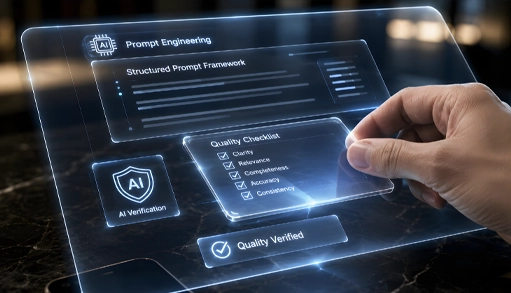
At Reflections, we believe the next phase of AI-enabled engineering is moving beyond simply giving instructions to AI systems. AI transformation is not about replacing engineering practices; it is about amplifying human creativity, expertise, and problem-solving capabilities. This emerging approach is known as Loop Engineering, an AI-driven software development approach where engineering activities happen through continuous cycles of interaction, evaluation, refinement, and improvement.
Rethinking How We Build with AI
The evolution of software engineering has always been driven by a shift in how humans interact with technology. From manual coding to frameworks, cloud-native architectures, DevOps, and now AI-assisted development, every transformation has changed not just the tools we use, but the way we think about building software.
At Reflections, we believe the next phase of AI-enabled engineering is moving beyond simply giving instructions to AI systems. The future is about creating continuous feedback-driven workflows where AI can understand context, generate solutions, evaluate outcomes, and improve iteratively.
This emerging approach is often referred to as Loop Engineering.
What is Loop Engineering?
Loop Engineering is an AI-driven software development approach where engineering activities happen through continuous cycles of interaction, evaluation, refinement, and improvement.
Instead of treating AI as a one-time assistant that generates code or content based on a single request, Loop Engineering treats AI as an active collaborator within the engineering lifecycle.
A typical loop consists of:
- Defining the intent
The developer, architect, or product team defines the business objective, technical requirement, or desired outcome.
- Generating solutions
AI helps create possible solutions such as architecture options, code implementations, test cases, documentation, UI designs, or technical approaches.
- Validating and analysing
The generated output is reviewed against quality standards, security requirements, business rules, performance expectations, and engineering best practices.
- Refining and optimizing
Based on feedback, AI continuously improves the output until it reaches the desired quality level.
This creates a continuous improvement cycle where humans provide strategic direction and AI accelerates execution.
Loop Engineering vs Prompt Engineering: What has Changed?
Prompt Engineering introduced a powerful way of interacting with AI models by focusing on creating effective instructions to achieve better results.
In Prompt Engineering, the primary focus is on:
• Asking the right questions
• Providing better context
• Structuring instructions clearly
• Improving the quality of AI responses
For example, a developer may use a prompt such as:
“Generate a React component following our design system standards with accessibility compliance.”
The AI generates an output based on that instruction.
Loop Engineering takes this further.
Instead of a single interaction, the process becomes:
“Generate the component → review the implementation → identify gaps → improve accessibility → optimize performance → validate against standards → refine again.”
The difference is moving from instruction-driven AI usage to continuous collaboration with AI.
Prompt Engineering helps us communicate with AI effectively.
Loop Engineering helps us build, evaluate, and improve solutions continuously with AI.
Why Loop Engineering Matters for Modern Software Development
The complexity of modern applications continues to increase. Teams are expected to deliver faster while maintaining scalability, security, quality, and user experience.
Loop Engineering enables teams to:
Accelerate Development Cycles
AI can assist across multiple stages of the SDLC; from requirements analysis and architecture design to coding, testing, and documentation.
Engineering teams spend less time on repetitive tasks and more time solving complex business problems.
Improve Software Quality
Continuous AI-assisted validation helps identify potential issues earlier, including:
• Code quality gaps
• Security vulnerabilities
• Performance concerns
• Test coverage improvements
• Architecture alignment
Enable Better Collaboration
Loop Engineering creates a shared feedback mechanism between developers, architects, QA engineers, product teams, and AI systems.
It encourages teams to focus on outcomes rather than only execution.
Support Continuous Learning
Every refinement cycle improves the quality of future interactions. Teams build reusable knowledge patterns, engineering practices, and AI workflows.
Loop Engineering across the Software Development Lifecycle
At Reflections, we see Loop Engineering becoming relevant across the entire engineering ecosystem.
Requirements Engineering
AI can analyse business requirements, identify missing details, suggest acceptance criteria, and improve requirement clarity.
Architecture & Design
Architects can use AI to explore design alternatives, evaluate trade-offs, and validate non-functional requirements.
Development
Developers can leverage AI for:
Code generation, refactoring, unit test creation, debugging assistance, and code reviews
Quality Engineering
AI can support:
Test scenario generation, automation improvements, defect analysis, and regression optimization
DevOps & Operations
AI-driven loops can help monitor systems, analyse incidents, optimize deployments, and improve reliability.
The Human Role in Loop Engineering
While AI becomes a stronger engineering partner, human expertise remains central.
Successful Loop Engineering requires:
• Strong engineering fundamentals
• Business understanding
• Architecture thinking
• Security awareness
• Critical evaluation skills
The role of engineers will continue to evolve from writing every line of code manually to designing intelligent workflows, guiding AI systems, and ensuring engineering excellence.
Building the Future with AI-Augmented Engineering
At Reflections, we believe AI transformation is not about replacing engineering practices; it is about amplifying human creativity, expertise, and problem-solving capabilities.
The future software engineer will not just write code. They will orchestrate intelligent systems, design effective workflows, and continuously improve solutions through AI-powered engineering loops.
Loop Engineering represents the next step in this journey; moving from AI-assisted development to AI-collaborative engineering. As organizations embrace AI-native ways of working, the ability to create continuous improvement loops will become a key differentiator in building faster, smarter, and more resilient digital experiences.
Author: Syam Kumar M - Associate Director - Solution Architecture